
Trigger Points - Tibialis Posterior
Tibialis Anterior Trigger Points - Stuart Hinds
The tibialis posterior is the deepest muscle on the back of the leg. It helps maintain the arches of the foot.
ORIGIN
Lateral part of posterior surface of tibia. Upper two-thirds of posterior surface of fibula. Most of interosseous membrane.
INSERTION
Tuberosity of navicular. By fibrous expansions to sustentaculum tali, three cuneiforms, cuboid, and bases of 2nd, 3rd, and 4th metatarsals.
ACTION
Inverts foot. Assists in plantar flexion of ankle joint. Antagonist: tibialis anterior.
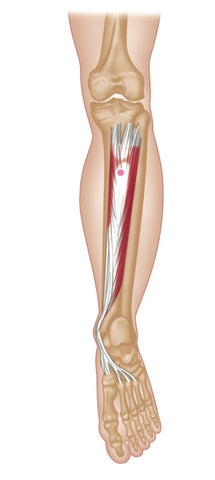
Tibialis Posterior - Common Trigger Point Site
NERVE
Tibial nerve, L(4), 5, S1. BASIC FUNCTIONAL
MOVEMENT
Examples: standing on tiptoes; pushing down car pedals.
REFERRED PAIN PATTERNS
Vague calf pain, with increased intensity along achilles tendon to heel/sole of foot.
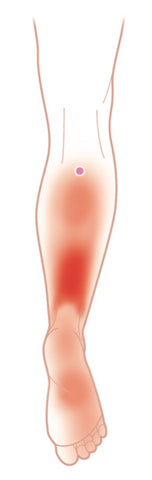
Tibialis Posterior Trigger Point - Typical Pain Pattern
INDICATIONS
Achilles tendonitis, calf/heel pain, plantar fasciitis, pain running/walking on uneven surface, Morton’s neuroma, foot numbness in patch around metatarsals, toe cramps, hammer/claw toe, tarsal tunnel syndrome.
CAUSES
Arthritic toes, poor footwear (heels) or orthotics, sports (e.g. walking, jogging, running, sprinting), prolonged driving (pedals).
DIFFERENTIAL DIAGNOSIS
Shin splints. Posterior tibial compartment syndrome (deep). Tendon rupture. Tenosynovitis. Achilles tendonitis. Deep vein thrombosis. Cardiovascular.
CONNECTIONS
Flexor digitorum longus, peroneal muscles, flexor hallucis longus

This trigger point therapy blog is intended to be used for information purposes only and is not intended to be used for medical diagnosis or treatment or to substitute for a medical diagnosis and/or treatment rendered or prescribed by a physician or competent healthcare professional. This information is designed as educational material, but should not be taken as a recommendation for treatment of any particular person or patient. Always consult your physician if you think you need treatment or if you feel unwell.
Disclaimer
The information in this article is intended for educational purposes within the context of continuing education for massage therapists, continuing education for athletic trainers, continuing education for physical therapists, continuing education for chiropractors, and continuing education for rehabilitation professionals. It is not a substitute for medical advice, diagnosis, or treatment. Although every effort has been made to ensure accuracy and reflect current understanding at the time of publication, practitioners must always work within the legal scope of their professional practice and follow all regional regulatory guidelines.
Hands-on techniques and clinical applications described in this material should only be performed by appropriately trained and licensed professionals. Individuals experiencing pain or symptoms should be referred to a qualified healthcare provider for assessment. Niel Asher Education is not responsible for any injury, loss, or damage resulting from the use or misuse of the information provided in this content.

Top CE Value Packs



Product list
Tools and Accessories


Continuing Professional Education
Looking for Massage Therapy CEUs, PT and ATC continuing education, chiropractic CE, or advanced manual therapy training? Explore our evidence-based online courses designed for hands-on professionals.

