
Digastricus Muscle - Trigger Points

Latin digastricus, having two (muscle) bellies
Origin
Anterior belly: digastric fossa on inner side of lower border of mandible, near symphysis. Posterior belly: mastoid notch of temporal bone.
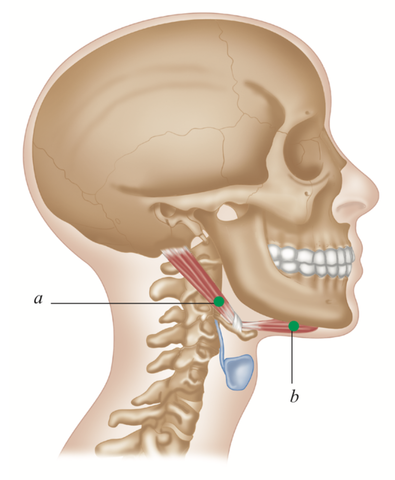
a) Posterior, b) Anterior
Insertion
Body of hyoid bone via a fascial sling over an intermediate tendon.
Action
Raises hyoid bone. Depresses and retracts mandible as in opening the mouth.
Nerve
Anterior belly: mylohyoid nerve, from trigeminal V nerve (mandibular division).
Posterior belly: facial (V11) nerve.
Trigger Point Referred Pain
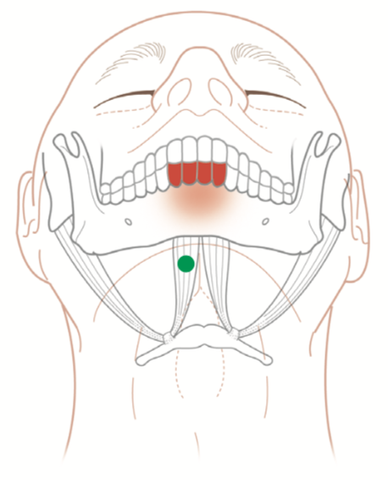
Anterior: lower four incisor teeth, tongue, and lip, occasionally to chin.
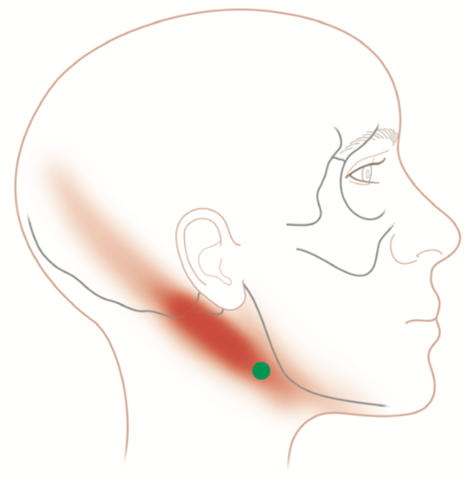
Posterior: strong 2 cm zone around mastoid and vaguely the zone to chin and throat, occasionally to scalp.
Indications
Throat pain, dental pain (four lower incisors), headache, jaw pain,
renal tubular acidosis, prolonged/ extensive dental work (blurred vision and dizziness), lower mouth opening, difficulty swallowing, vocal/singing problems.
Causes
Head-forward/upper crossed
pattern, poor bite mechanics and/
or clenching/grinding of teeth (bruxism), whiplash, telephone to chin, musical instruments (e.g. violin or wind instruments).
Differential Diagnosis
Dental problems—malocclusion. Hyoid bone. Thyroid problems. Thymus gland. Sinusitis. Carotid artery.
Connections
SCM, sternothyroid, mylohyoid, stylohyoid, longus colli/capitis, geniohyoid, cervical vertebrae, temporalis, masseter.
General Self Help:
Bite Plates/Blocks/ Occlusal Splints
Opinion varies as to efficacy, type, and duration of use for occlusal devices. An evidence base suggests they can be beneficial.
Advice
Breathing patterns. Bruxism. Head postures.
Posture
Head forward or upper crossover patterns can be treated by a range of manual and trigger point therapists.
Online TMJ Trigger Point Course

This trigger point therapy blog is intended to be used for information purposes only and is not intended to be used for medical diagnosis or treatment or to substitute for a medical diagnosis and/or treatment rendered or prescribed by a physician or competent healthcare professional. This information is designed as educational material, but should not be taken as a recommendation for treatment of any particular person or patient. Always consult your physician if you think you need treatment or if you feel unwell.


Disclaimer
The information in this article is intended for educational purposes within the context of continuing education for massage therapists, continuing education for athletic trainers, continuing education for physical therapists, continuing education for chiropractors, and continuing education for rehabilitation professionals. It is not a substitute for medical advice, diagnosis, or treatment. Although every effort has been made to ensure accuracy and reflect current understanding at the time of publication, practitioners must always work within the legal scope of their professional practice and follow all regional regulatory guidelines.
Hands-on techniques and clinical applications described in this material should only be performed by appropriately trained and licensed professionals. Individuals experiencing pain or symptoms should be referred to a qualified healthcare provider for assessment. Niel Asher Education is not responsible for any injury, loss, or damage resulting from the use or misuse of the information provided in this content.

Top CE Value Packs


Product list
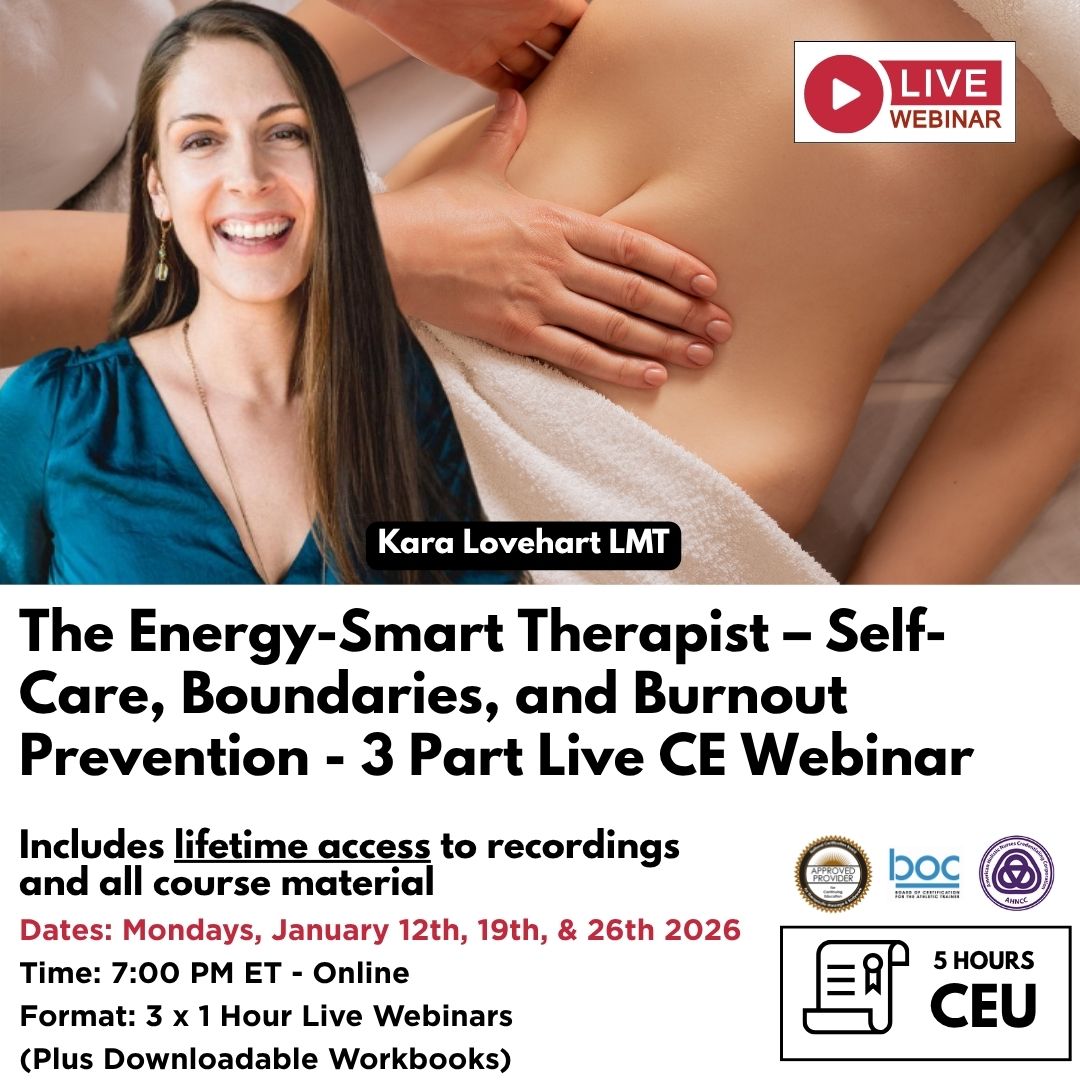
Tools and Accessories


Continuing Professional Education
Looking for Massage Therapy CEUs, PT and ATC continuing education, chiropractic CE, or advanced manual therapy training? Explore our evidence-based online courses designed for hands-on professionals.

