

Calf Muscle Stretch - Find the Way That Works for You!
Watch the video above to get the concept and try the stretch demonstrated by Dani. If you're not quite able to get into that position (comfortably and without pain) try this slightly easier version (see below):
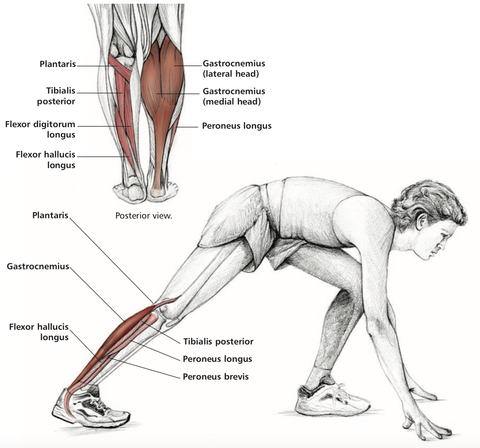
Technique:
Stand upright and place one foot in front of the other. Bend your front leg and keep your back leg straight. Push your heel to the ground and lean forward. Place your hands on the ground in front of you.
Muscles being stretched:
Primary muscle: Gastrocnemius.
Secondary muscles: Tibialis posterior. Flexor hallucis longus. Flexor digitorum longus. Peroneus longus and brevis. Plantaris.
Sports that benefit from this stretch:
Basketball. Netball. Boxing. Cycling. Hiking. Backpacking. Mountaineering. Orienteering. Ice hockey. Field hockey. Ice-skating. Roller- skating. Inline skating. Martial arts. Tennis. Badminton. Squash. Running. Track. Cross-country. American football (gridiron). Soccer. Rugby. Snow skiing. Water skiing. Surfing. Swimming. Walking. Race walking.
Sports injury where stretch may be useful:
Calf strain. Achilles tendon strain. Achilles tendonitis. Medial tibial pain syndrome (shin splints).
Common problems and more information for performing this stretch correctly
Make sure the toes of your back leg are facing forward. Letting your toes point to one side will cause this stretch to put uneven tension on the calf muscles. Over an extended period of time, this could lead to a muscle imbalance.
Find a Trigger Point Professional in your area
More Articles About Gastrocnemius
More Articles About Stretching
Dry Needling for Trigger Points
Certify as a Trigger Point Therapist
NAT Education Membership Plans


