

Stretching Pectoralis Muscles - Dr. Jonathan Kuttner
Neuromuscular Stretching Technique
The pec major eccentrically decelerates extension, horizontal abduction, external rotation, and retraction of the shoulder joint.
This muscle can develop multiple myofascial trigger points because of its clavicular and sternal fibers, firing pain across the anterior deltoid and down the lateral aspect of the arm into the thumb and fourth and fifth digits.
A rare myofascial trigger point can mimic the symptoms of angina pectoris. Pain from these myofascial trigger points can also be felt as interscapular and subscapular pain.
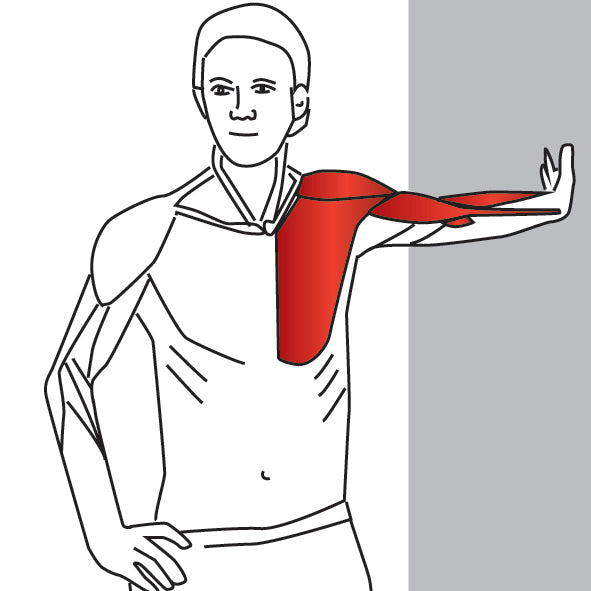
Here's our favorite stretch for the pec major. We often recommend this stretch in clinic, as it's easy to perform, and works simultaneously on pec minor, anterior deltoid, biceps brachii, brachialis, brachioradialis and coracobrachialis.
Technique
Stand with your arm extended to the rear and parallel to the ground. Hold on to an immovable object and then turn your shoulders and body away from your outstretched arm.
Keep your arm parallel to the ground and your fingers pointing backwards.
Muscles Being Stretched
Primary muscles: Pectoralis major and minor. Anterior deltoid.
Secondary muscles: Biceps brachii. Brachialis. Brachioradialis. Coracobrachialis.
Injury Where Stretch May Be Useful
Dislocation. Subluxation. Acromioclavicular separation. Sternoclavicular separation. Impingement syndrome. Rotator cuff tendonitis. Shoulder bursitis. Frozen shoulder (adhesive capsulitis). Biceps tendon rupture.Bicepital tendonitis. Biceps strain. Chest strain. Pectoral muscle insertion inflammation.
Find a Trigger Point Professional in your area
Dry Needling for Trigger Points
Certify as a Trigger Point Therapist
Certify as a Trigger Point Therapist:

This trigger point therapy blog is intended to be used for information purposes only and is not intended to be used for medical diagnosis or treatment or to substitute for a medical diagnosis and/or treatment rendered or prescribed by a physician or competent healthcare professional. This information is designed as educational material, but should not be taken as a recommendation for treatment of any particular person or patient. Always consult your physician if you think you need treatment or if you feel unwell.


