

Piriformis syndrome is a result of impingement of the sciatic nerve by the piriformis muscle
Incorrect form or improper gait often leads to tightness and inflexibility in piriformis.
The condition occurs more frequently in women than men (6:1). When piriformis becomes tight it puts pressure on the underlying nerve, causing pain similar to sciatica.
The pain usually starts in the mid-gluteal region and radiates down the back of the thigh.
Trigger Points
Trigger points are often associated with piriformis syndrome.
This may include cases where active trigger points in the piriformis cause the shortening and tightening of the muscle leading to impingement of the sciatic nerve.
In other cases trigger points in associated muscles may become active in response to the sensitivity of the sciatic nerve - i.e. part of a protective holding pattern.
Cause of injury
Incorrect form or gait while walking or jogging. Weak gluteal muscles and/or tight adductor muscles.
Signs and symptoms
Pain along the sciatic nerve. Pain when climbing stairs or walking up an incline. Increased pain after prolonged sitting.
Complications if left unattended
Chronic pain will result if left untreated. The tight muscle could also become irritated causing stress on the tendons and points of attachment.
Immediate treatment
RICER. Anti-inflammatory medication. Then heat and massage to promote blood flow and healing.
Rehabilitation and prevention
During rehabilitation a gradual return to activity and continued stretching of the hip muscles is essential.
Start with lower exercise intensity or duration. Identifying the factors that caused the problem is also important.
Strengthening the gluteal muscles and increasing the flexibility of the adductors will help to alleviate some of the stress and prevent the piriformis from becoming tight.
Maintaining a good stretching regimen to keep the piriformis muscle flexible will help, while dealing with the other issues.
Long-term prognosis
Piriformis syndrome seldom results in long-term problems when treated properly.
Rarely, a corticosteroid injection or other invasive method may be required to alleviate symptoms.
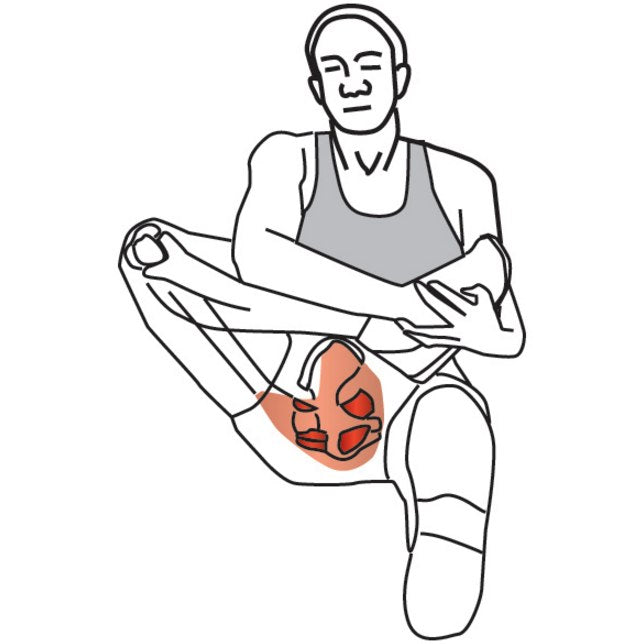
Technique
Sit with one leg straight and hold onto your other ankle. Pull it directly towards your chest.
Use your hands and arms to regulate the intensity of this stretch. The closer you pull your foot to your chest, the more intense the stretch.
Muscles being stretched
Primary muscles: Piriformis. Gemellus superior and inferior. Obturator internus and externus. Quadratus femoris.
Secondary muscle: Gluteus maximus.
Injury where stretch may be useful
Piriformis syndrome. Snapping hip syndrome. Trochanteric bursitis.
This blog is intended to be used for information purposes only and is not intended to be used for medical diagnosis or treatment or to substitute for a medical diagnosis and/or treatment rendered or prescribed by a physician or competent healthcare professional. This information is designed as educational material, but should not be taken as a recommendation for treatment of any particular person or patient. Always consult your physician if you think you need treatment or if you feel unwell.


