


Quadratus Femoris Muscle
Treating Quadratus Femoris - Stuart Hinds
Trigger Points in the Quadratus Femoris typically appear together with other Trigger Points in the immediate area, including the hip, and the pelvic floor
This small muscle helps to rotate the hip sideways. When the hip is flexed, it helps move the hip and thigh away from midline.
The quadratus femoris is one of the short lateral rotator core muscles, which interact with dysfunctions of L4 through S3 vertebrae.
Movement is the best indicator as to which lateral rotator is involved. This muscle may stick to the underlying obturator externus.
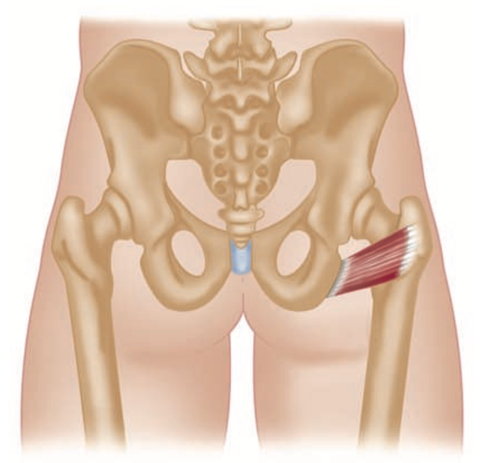
Quadratus Femoris
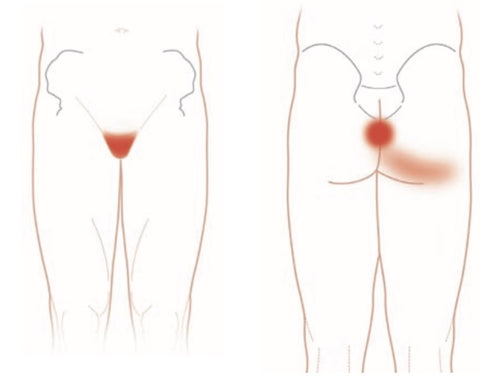
Quadratus Femoris - Typical Referred Pain Pattern
Trigger Points - Quadratus Femoris
Trigger Points in the Quadratus Femoris typically appear together with other Trigger Points in the immediate area, including the hip, and the pelvic floor.
Clients who have active trigger points in the quadratus femoris will typically report pain, stiffness and some difficulty walking, particular down hills or stairs.
The pain from these trigger points can be quite sharp, often sufficiently bad can that it interrupts sleep.
Some types of athletes are more prone than others to suffering from trigger points in the quadratus femoris, especially gymnasts and dancers.
It's usually important to treat these quadratus femoris trigger points as they will cause tightness and restrictions that will often lead to more serious injuries such as strains and tears.


